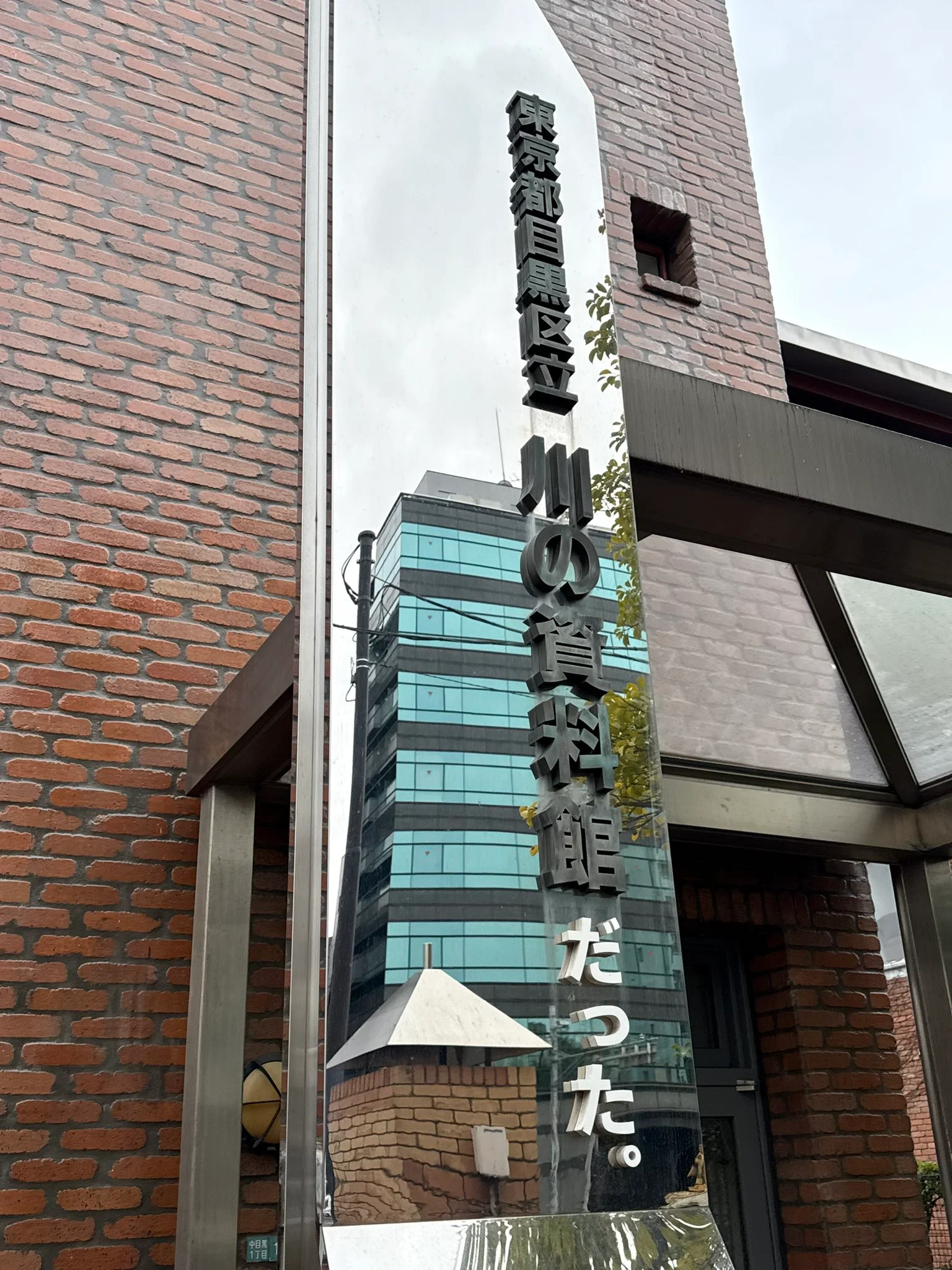
What's going on
In Tokyo’s Meguro ward, a former municipal facility called the “Meguro Ward River Museum” — a small public space dedicated to the history of the local Meguro River — closed down and was repurposed as a coworking space called “Funai River Tatemono” in May 2023. The original sign, a large vertical installation with dark embossed characters reading “Tokyo Metropolitan Meguro Ward River Museum,” was left on the building. Removing or replacing it apparently wasn’t in the budget.
So someone added two characters to the bottom instead, in noticeably white text clearly distinct from the rest: “だった。” — meaning “was.” Period.
Here’s why that lands the way it does. When a Japanese facility moves out of a building, the standard signage approach is to add a prefix like “元” (former) or suffix the address with “跡地” (site of the former ___). These are noun phrases — they label. What this building has instead is a complete sentence. “川の資料館だった。” means “It was the River Museum.” — subject implied, past tense declared, full stop appended. The building isn’t tagging itself as a former facility; it’s narrating its own history, as if composing the opening line of its own memoir. The white text, clearly bolted on after the fact, makes the edit unmistakable to anyone walking by.
Comments
My take
Comments loosely translated for tone. Reactions collected from Togetter and X threads.
View original thread →
@mochiunagi · View on X
Japanese has two past-tense forms for "was": "でした" (polite/formal) and "だった" (casual/plain). Using the casual form makes the sign feel even more blunt and offhand — like the building couldn't be bothered with formalities about its own history.
「わず」is the Japanese hiragana phonetic spelling of the English word "was" — a one-word meta-response to a whole thread about "だった," which means exactly that.
@Cinnamon_danshi · View on X