What's going on
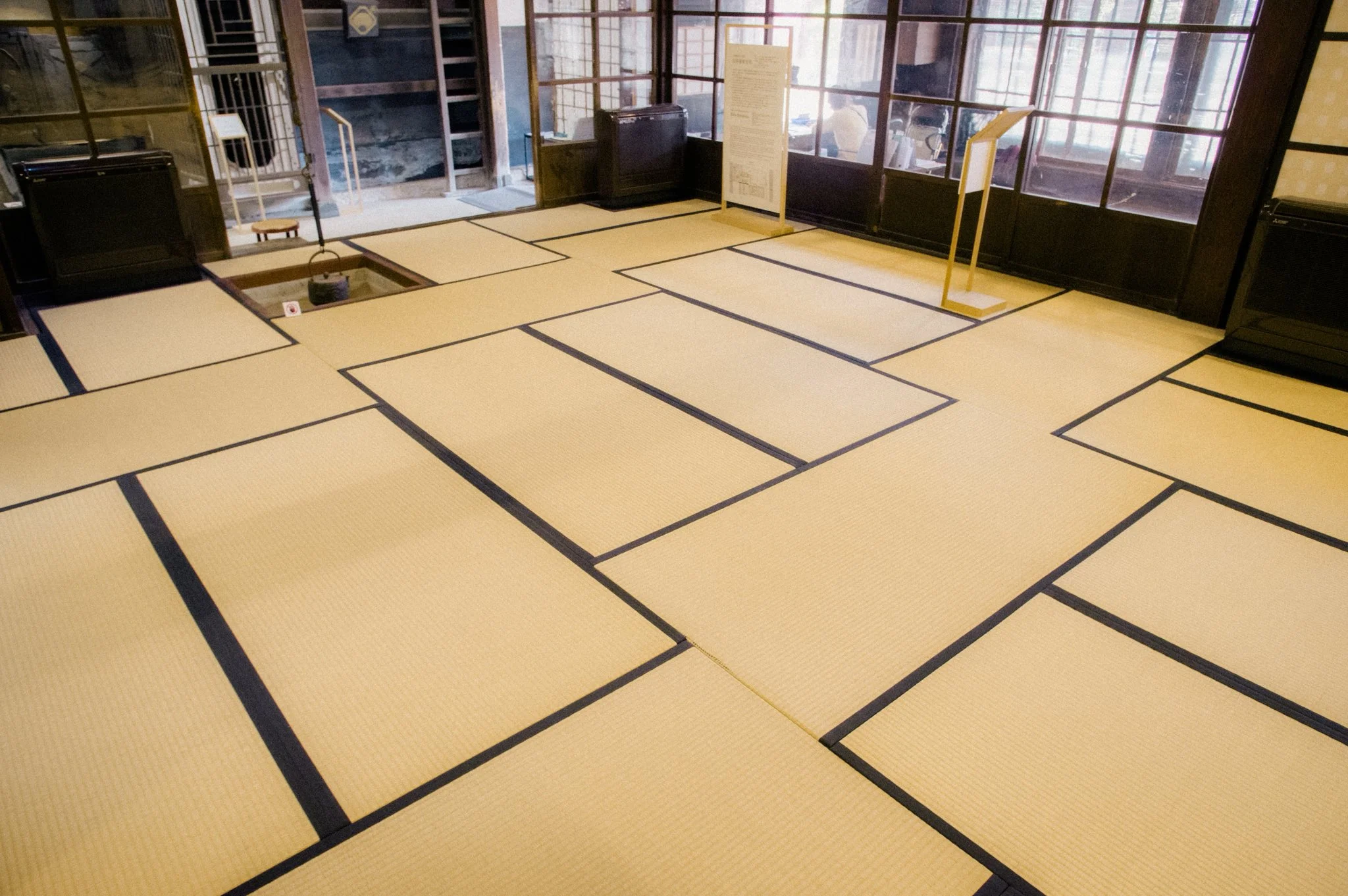
In traditional Japanese rooms, tatami mats follow a set of layout rules that go back to the Edo period. The core rule: the seams between mats should never line up to form a cross, because four corners meeting at a single point is considered inauspicious. The standard "auspicious" arrangement — called shugi-jiki — staggers the mats so that seams form T-shapes rather than crosses. Most Japanese homes, tea rooms, and inn guest rooms still follow some version of this convention. (For a detailed breakdown of how the rules work, see this Japanese-language guide.)
So when a photo surfaced showing a Japanese-style room in a historic mansion in Iwase, Toyama, the reaction was immediate confusion. The mats run in completely different directions, some bordered and some borderless, with no obvious relationship to any familiar layout. Knowledgeable commenters quickly identified the location: the Mori family estate, one of the so-called Five Great Families of Iwase — dynasties who built enormous fortunes through the Kitamaebune (北前船, the Northern Sea Route trading network that connected Osaka to Hokkaido via the Sea of Japan, peaking in the late Edo and Meiji periods) shipping trade. Their mansions still stand along the old Hokuriku Road. And the tatami layout, it turns out, isn't a mistake or a renovation compromise. It's a deliberate design that represents the flow of a river — and hides at least one very good pun in the floorboards.
Comments
My take
Comments loosely translated for tone. Reactions collected from Togetter and X threads.
View original thread →

@tabisurukozo · View on X
Hanjō (半畳, “half mat”) sounds identical to the second half of shōbai hanjō (商売繁盛), a set phrase for a flourishing business. The wordplay is deliberate — another layer of wealth signaling, but built into the floor itself.
@SushiCujira · View on X