← Home / Culture

Funny·Culture· Sep 17, 2026 · 5 min

Curse You, Tokugawa: Osaka Watches Its Station Get Filled In

Hankyu Umeda is filling in the gaps between its platforms, and Osaka is treating it as a breach of a 400-year-old truce.

Curse You, Tokugawa: Osaka Watches Its Station Get Filled In

What's going on

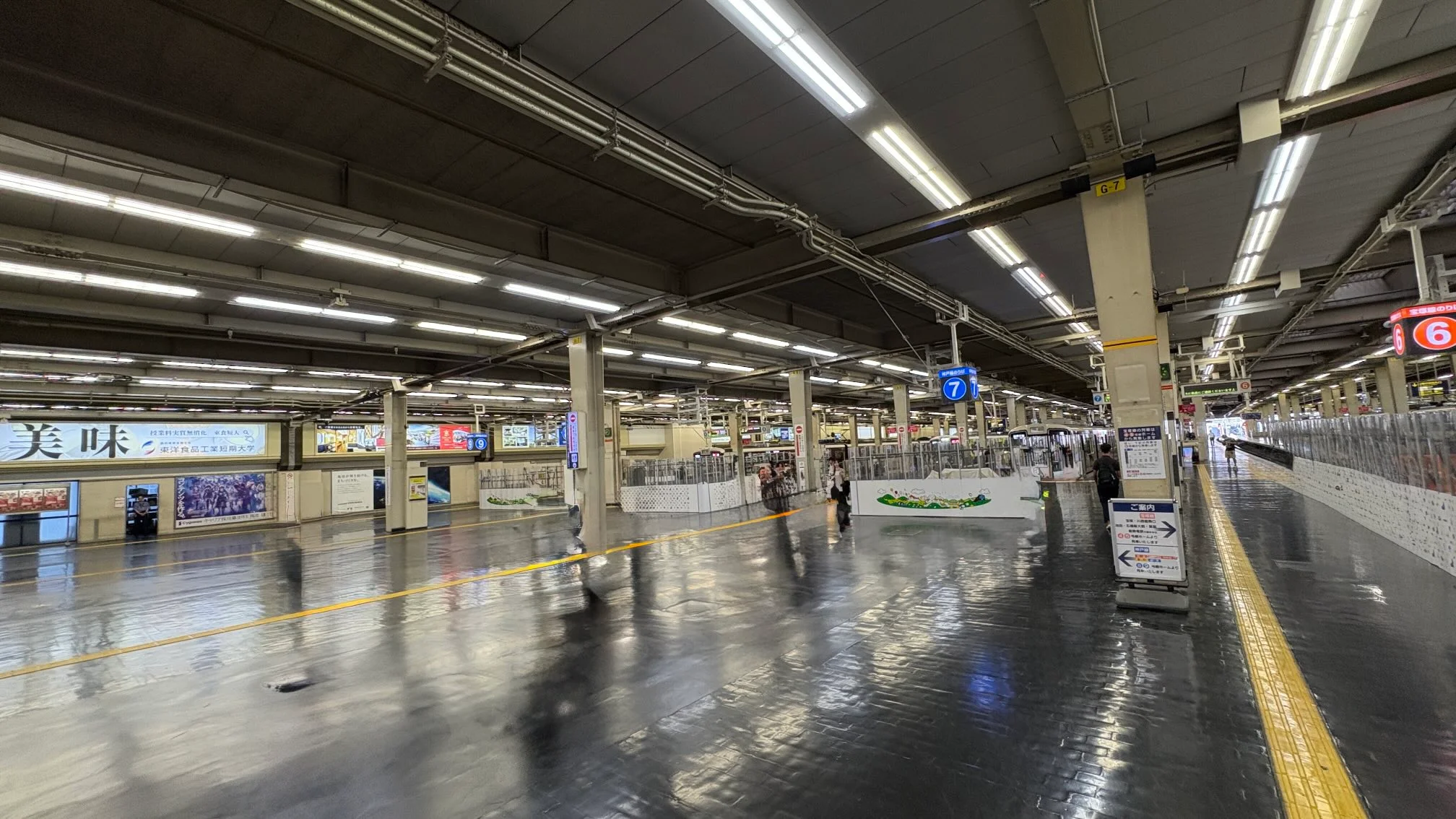
Hankyu Umeda Station in Osaka is one of the largest private-railway terminals anywhere — nine platforms side by side under one enormous roof, with trains for Kyoto, Kobe and Takarazuka pulling out of the same building. The station and the hotel attached to it are in the middle of a long redevelopment, and part of that work means decking over the tracks that run between the platforms. Photos of those gaps quietly disappearing started going around, and the reaction was not really about construction.

Filling things in is a sore subject in Osaka. In 1614, after the winter campaign of the Siege of Osaka, the Toyotomi agreed to a truce with Tokugawa Ieyasu on the condition that only the outer moat of Osaka Castle be filled in. Ieyasu's men filled in the inner moats too. The castle was left with nothing to defend, Ieyasu came back the following summer to finish the job, and the Toyotomi were wiped out. Four centuries later, the grudge is still in circulation — mostly as a running joke, but a joke everyone knows the words to.

So what follows is a crowd of commuters watching their station lose its moats one bucket at a time, slipping into period-drama speech, and addressing their complaints to a man who died in 1616.

Comments

So Hankyu really did go and fill in the platforms at Umeda.
阪急の梅田駅、本当にホーム埋めたんやな
Filled in… Umeda… can’t laugh, but wow. Before ↓
埋めた…梅田 ……笑えんけど凄! 以前↓

“Umeta” means filled in, and it is one small step from there to Umeda, the name of the district. That isn’t only a gag: the place name is widely held to come from 埋田, “filled-in field”, after the marshland that was reclaimed to build on.

That platform is being buried alive.
ほーむられてますやん

A train platform in Japanese is a hōmu, borrowed from the English “home”. To be buried, or laid to rest, is hōmurareru. The comment is one word doing both jobs at once, and there is no way to carry that across.

What did they fill it in for, anyway
何のために埋めたんだろ
It’s prep work for the big rebuild — the station and the Hotel New Hankyu next door are being redeveloped together.
阪急梅田駅と新阪急ホテルを含めた大規模な建て替え、リニューアル工事の準備ですね
Curse you, Tokugawa. The agreement was the outer moat only, and yet you go and fill in the Hankyu platforms as well…
おのれ徳川。 外堀だけの約定だったにも関わらず、 阪急のホームまで埋めるとは…。
At this rate it is nothing but a naked station…! (A “naked castle” is one stripped of its moats and outworks, left standing there with only its keep.)
これではもはや、ただの裸駅ではないか…!
His Lordship the Naifu means to strip Osaka bare! (Naifu was Ieyasu’s court title as Inner Minister, and it’s what retainers call him in period dramas.)
内府どのは大阪を丸裸にするつもりにございます!
Hold, I say! When one speaks of all the moats, the platforms are naturally included, so it is, gozasōrō!
あいや、しばらく! 総掘りとはほうむも含めるのはこれ当然の事に御座候!
To call that confection gozasōrō is a declaration of war upon imagawayaki! Which is to say you have declared yourself an enemy of the Lord of Mikawa, who passed his boyhood as a hostage in the Imagawa house! Present yourself at Osaka Castle at once!
あの菓子を御座候と呼ぶことは今川焼きへの宣戦布告!つまり今川家にて人質として過ごしていた三河守に対しても敵対を表明されたと言うですな! 是非大坂城へ参られよ!

Gozasōrō is an archaic sentence ending, the kind of thing samurai say in period dramas — but it is also the brand name of a well-known maker of imagawayaki, the round griddle cake filled with sweet bean paste. That cake shares its name with the Imagawa clan, and Ieyasu spent his childhood as a hostage of the Imagawa. So using the brand name rather than the generic one gets spun into an insult to the Imagawa, and therefore to Ieyasu, the Lord of Mikawa.

It’s the tracks that got filled in, not the platforms, and yet everyone understands perfectly well when you say they filled in the platforms. That’s the funny part.
埋めたのはホームではなく線路なのに、「ホームを埋めた」でみんな理解しているのが面白い。
Next thing you know he’ll be picking a fight over a temple bell. (In 1614 Ieyasu read a hidden insult to his name into the inscription on a bell at Hōkō-ji temple, and used it as his pretext for war.)
寺の鐘にイチャモンつけられそう
Tokugawa: “Your real aim is to shave two cars’ worth of platform off every limited-express stop on the Kobe Line and flip the land, isn’t it. Sannomiya, Okamoto, Shukugawa, all of them expensive — and then Nishinomiya-Kitaguchi, the number one station in Kansai’s where-do-you-want-to-live rankings. You’re a crafty one yourself, Hankyu Hanshin Properties.” (Those are all stops on Hankyu’s Kobe Line, through the pricey commuter belt between Osaka and Kobe. And “you’re a crafty one yourself” is the exact line a corrupt magistrate purrs at a scheming merchant in every period drama.)
徳川「本心は神戸線の特急停車駅の2両分のホームを削って、土地を転売したいんだろう。地価の高い三宮、岡本、夙川、そして住みたい駅ランキング関西一位の西宮北口。お主もワルよのぉ、阪急阪神不動産」
Recent scholarship has established that the platforms of Hankyu Umeda Station were in fact classified as part of Osaka Castle’s outer moat. Tokugawa Ieyasu and the Tokugawa house therefore bear no blame in this matter.
最近の研究では、阪急梅田駅のホームは大阪城の外堀扱いだったことが判明しています。 ですので、徳川家康や徳川家はこの件について非はありません。
Even for a sōgamae, that is an absurdly large Osaka Castle. (A sōgamae is the outermost line of defense, the one that encloses the whole castle town rather than just the castle.)
惣構にしても広すぎる大阪城
So that’s why the underground is such a labyrinth…
だからあんなに地下迷宮…
My lord — it has come to this!
殿、かくなる上は!
Thus began the Summer Siege of Hankyu Umeda. The Tokugawa side looked to have the advantage, but as everyone knows, the Umeda Dungeon is so complicated that saying “meet at Umeda Station” cost them hours in getting their forces together. (Several separate stations in Osaka are all called Umeda, joined by an underground warren that locals call the Umeda Dungeon.)
こうして始まった阪急梅田夏の陣では 徳川側が有利と見えたが梅田ダンジョンの複雑さから、集合場所を梅田駅と言ったせいで合流に時間がかかったのは余りにも有名
Solid comeback. This is heading straight for the construction of the Hankyu Sanada-maru. (The Sanada-maru was a barbican fort thrown up outside Osaka Castle’s weakest flank in 1614, and it held.)
いいツッコミです これは阪急真田丸建設の流れ
Hankyu Kensō: “Let’s build the Sanada-maru right here.”
阪急建装「ここに真田丸を作ろう」
The Sanada-maru (a kiosk).
真田丸(キオスク)
Curse you, Tokugawa! Have you put the Midōsuji Line even further away?! Wearing down the Osaka side by making the commute a burden — so that’s the scheme! (The Midōsuji Line is the city’s main subway artery, and changing to it from Hankyu already involves a long walk.)
おのれ徳川! また御堂筋線が遠くなったのか! 通勤の負担を強いて、大坂方の力を削ぐ算段か!
Such cruelty………
なんと非道なっ………
It really has turned into an annoying station.
ほんま鬱陶しい駅になった
The old tanuki shall not be forgiven. (Ieyasu’s nickname was “the old raccoon dog” — patient, sly, and not to be trusted for a second.)
許すまじ狸親父
The reputational damage the Tokugawa house is taking here is getting out of hand.
徳川家に風評被害が過ぎる
Well, this is Osaka we’re talking about, so I suppose it isn’t wrong……
まあ大阪の話やし間違っちゃいないか……
Let’s go get curry at the place inside the station and calm down lol
構内のカレー屋でカレー食べて落ち着こうやw
The marshland was filled in after the Edo period and that’s what became today’s Umeda, so without it, my lord, you couldn’t have bought those 551 pork buns you’re holding either. (551 Hōrai’s steamed pork buns are an Osaka institution, carried home in a box everyone recognizes on sight.)
江戸以降に湿地埋めて今の梅田に繋がったので、殿が今その手に持ってる551の豚まんもそこで買えないんですよ
Osaka Castle’s moat? When you’ve got it~ 😂😂😂 When you don’t… 😱😱😱 (551’s long-running ad cuts between a family delighted when the buns turn up and devastated when they don’t: “when there is” versus “when there isn’t”.)
大坂城のお堀が? ある時〜😂😂😂 無い時…😱😱😱
And so, filled in ⇒ Umeda, and thus the place name was born.
こうして、埋めた⇒梅田の地名が生まれたのであった。

My take

It's possible that what has just occurred here is, in the proper sense of the word, a historical incident.
Source & translation note

Comments loosely translated for tone. Reactions collected from Togetter and X threads.

View original thread →